Behind those statistics are millions of individual stories, and while there is no single approach that works for everybody, nutrition, movement, sleep, stress and wider lifestyle factors can all play an important role in managing type 2 diabetes.
When Debbie first came to see me, she knew something needed to change. She just didn’t know where to begin.
She had been living with type 2 diabetes for three years, alongside high blood pressure, elevated cholesterol, excess weight and menopausal symptoms.
But those diagnoses only told part of the story.
Debbie was exhausted.
Her sleep was poor, her energy was low and emotionally she felt completely depleted. After years of putting everybody else first, she had reached the point where she desperately wanted to feel like herself again.
The advice from her well-meaning GP was to lose weight and things would improve. On the surface, that might sound straightforward. In reality, it was anything but.
Like so many people, Debbie had already spent a considerable amount of money on diets, programmes and products promising rapid weight loss. None had addressed the bigger picture or helped her understand what was happening inside her body.
Her goals when we started working together were simple: improve her blood sugar management, lose weight and get her energy back.
But this was never going to be a case of chasing a number on the scales.
Looking beyond weight loss
When we looked at Debbie’s health as a whole, there were several interconnected areas that needed attention.
Her blood sugar was very poorly controlled, her blood pressure and cholesterol were high, she was chronically stressed, poorly hydrated and nutritionally depleted.
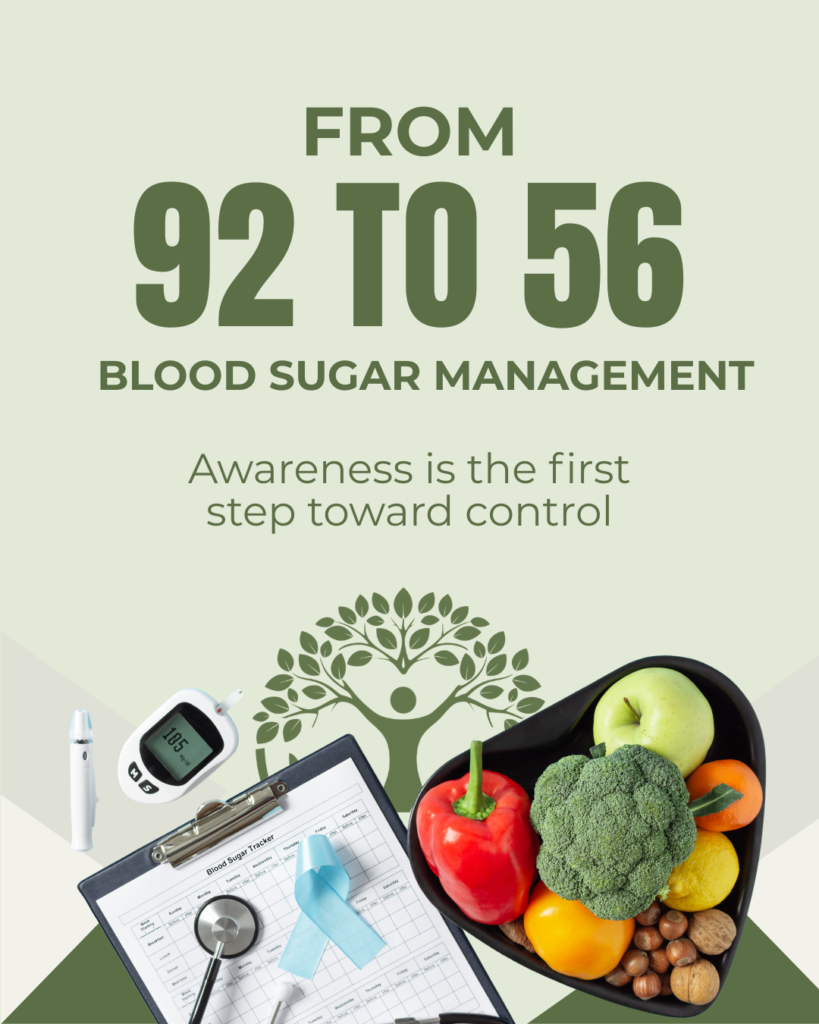
Her HbA1c, the blood test used to show average blood glucose levels over the previous two to three months, was 92 mmol/ml.
For context, in the UK, an HbA1c of 48 mmol/ml or above is considered to be within the diabetic range.
So rather than focusing on restriction or rapid weight loss, our priority was to create a sustainable approach that supported Debbie’s blood glucose, metabolic health, energy and overall wellbeing.
There was no magic diet. No quick fix. And no unrealistic promise about what she could achieve in 12 weeks.
Instead, we started building strong foundations.
So what did we change
Throughout the 12-week Restore Programme, we introduced changes gradually, constantly reviewing how Debbie was responding and making sure they could realistically become part of her everyday life.
We began by improving hydration and increasing foods that naturally supported her fluid and nutrient intake.
Her meals were carefully structured to support more stable blood glucose levels, with increasing amounts of protein and fibre, appropriate portions of unrefined carbohydrates, healthy fats and a much greater variety of vegetables, fruit and whole foods.
At the same time, we gradually reduced refined sugar and highly processed, high-GI foods rather than imposing an extreme or unnecessarily restrictive diet.
A continuous glucose monitor gave us valuable insight into Debbie’s individual response to different meals and foods. Instead of relying purely on generalised rules about what she “should” or “shouldn’t” eat, we could see her own glucose patterns, reactivity to certain foods and adapt accordingly.
We also considered her digestion and bowel health, alongside the nutritional support needed for healthy liver function and hormone metabolism.
But food was only one part of the picture.
Why stress and movement mattered too
Chronic stress can influence blood glucose regulation, sleep, appetite, energy and the behaviours that support our wider health.
For Debbie, understanding this connection was important.
Rather than treating blood sugar, weight, menopause symptoms, stress and fatigue as completely separate problems, we began looking at how they interacted.
Physical activity became another important part of her programme.
We introduced regular walking alongside a personalised resistance training programme, building gradually until Debbie was completing two PT sessions with me each week.
Resistance training is particularly valuable when supporting metabolic health because working and building skeletal muscle can help the body use glucose more effectively.
Most importantly, the programme was realistic. We weren’t looking for perfection.
We were building habits Debbie could continue long after our 12 weeks together had finished.
Then came the blood results! (and I’m still pinching myself)
At the end of the 12 weeks, Debbie returned to her GP for repeat blood tests.
Her HbA1c had fallen from:
92 mmol/ml to 56 mmol/ml.
Her cholesterol was the lowest it had ever been.
Her blood pressure had reduced.
And although weight loss had never been our sole focus, Debbie had also lost 10kg.
The numbers showed a significant improvement in her metabolic health.
But for me, they still weren’t the most important part of her transformation.
The person behind the numbers
When Debbie first came to me, she was tired, tearful and overwhelmed. She had spent years caring for other people and had lost confidence in her ability to care for herself.
Twelve weeks later, she is a different woman.
She has more energy. More confidence. She’s excited about preparing and eating food again. Her daily walks have become part of her routine and, perhaps most surprisingly to her, she is actually looking forward to our twice weekly training sessions.
And that is why I rarely look for one dramatic intervention when I work with a client.
Health doesn’t happen in isolated compartments.
Blood glucose can be influenced by nutrition, movement, stress, sleep, hormones, muscle mass and our everyday routines. When we begin to understand those connections, we can stop simply chasing individual symptoms and start building the foundations for meaningful, sustainable change.
Debbie didn’t need another quick-fix diet.
She needed to understand her body.
She needed a plan built around her.
And she needed changes that she could actually live with.
From an HbA1c of 92 to 56 in just 12 weeks, alongside improvements in blood pressure, cholesterol, weight, strength, energy and confidence, Debbie’s results show just how powerful those foundations can be.
If you recognise yourself in Debbie’s story, perhaps you’ve been told to lose weight, eat better or exercise more but nobody has helped you understand how to actually put the pieces together, you don’t have to keep trying to work it out alone.
My programme combines personalised nutritional therapy with movement and resistance training, looking beyond individual symptoms to understand the wider picture of your health.