If you’re tired, struggling with weight, not sleeping well, and feeling anxious — and you’ve already tried magnesium, this article is worth reading.
Because the problem might not be whether you’re taking magnesium. It might be which magnesium you’re taking.
What Does Magnesium Actually Do in the Body?
Magnesium supports over 300 biological processes, including energy production, blood sugar regulation, thyroid function, fat metabolism, protein synthesis, vitamin D activation, bone growth, GABA regulation, calcium balance, and your body’s natural antioxidant defence.
That list alone explains why low magnesium produces such a wide range of symptoms. It isn’t one problem, it’s many, showing up at once.
Low energy, stubborn weight gain, poor sleep, anxiety, joint pain, digestive issues and fluctuating blood sugar all can be linked to magnesium insufficiency. And for women in their 40s and 50s navigating hormonal shifts, these symptoms are easily misattributed to menopause alone.
Why Are So Many Women Deficient in Magnesium?
Magnesium deficiency is far more common than most people realise and it isn’t simply about not eating well.
Modern farming practices have significantly depleted magnesium levels in soil. Even a diet rich in vegetables and whole foods now delivers considerably less magnesium than it did a generation ago.
Add in the following common lifestyle factors and the deficit compounds:
- Chronic stress — depletes magnesium rapidly through urinary excretion
- High sugar intake and processed food — interferes with absorption
- Alcohol and fizzy drinks — increase magnesium excretion
- Common medications — diuretics and proton pump inhibitors (PPIs, prescribed for acid reflux) both reduce magnesium levels significantly
- High calcium intake — competes with magnesium for absorption
- Environmental toxins, including aluminium — disrupt mineral balance
The result is that a large proportion of women over 40 are running low and feeling it in ways that are too often dismissed or incorrectly treated.
Food First: The Best Dietary Sources of Magnesium
As a nutritional therapist, diet is always the starting point. Rebuilding magnesium through food is the most sustainable approach and supports absorption alongside the many other nutrients these foods provide.
Magnesium-rich foods to prioritise:
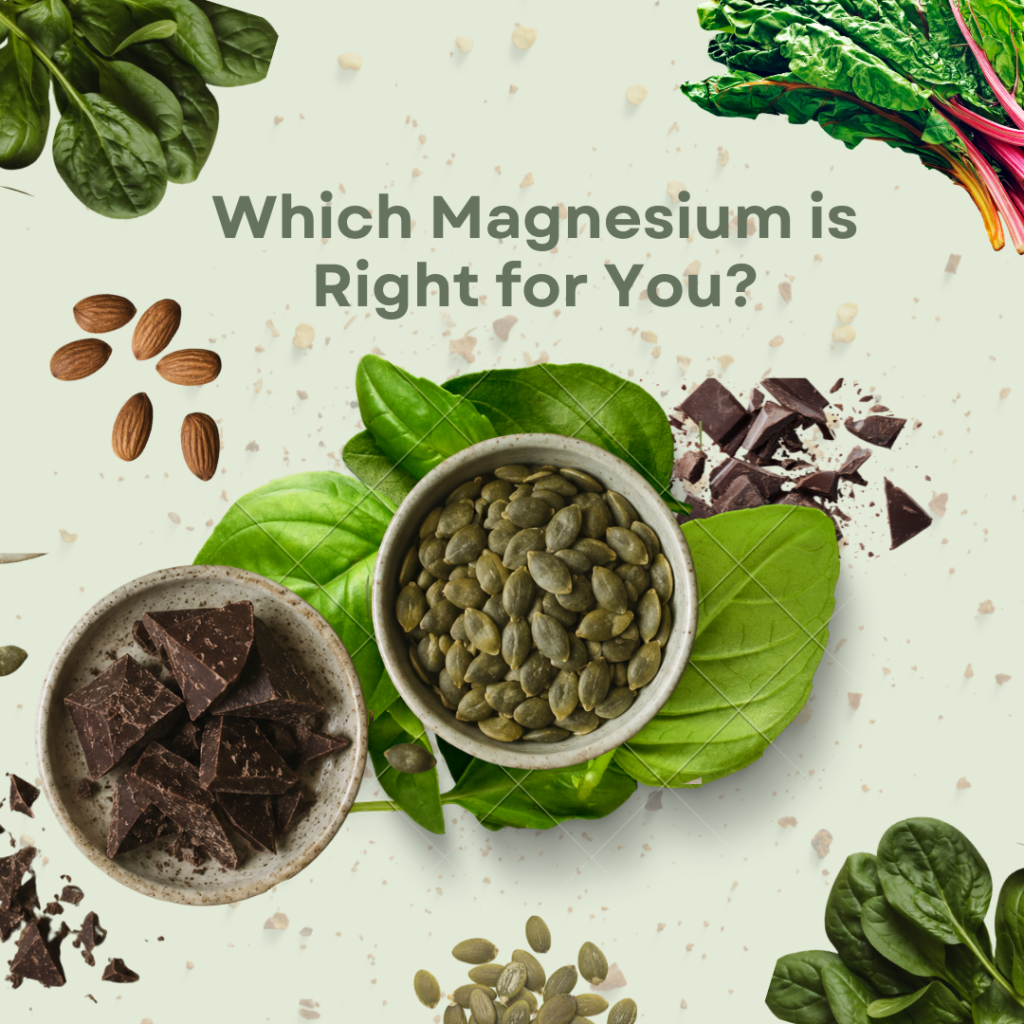
- Green leafy vegetables — spinach, kale, Swiss chard
- Nuts and seeds — particularly pumpkin seeds, sunflower seeds, almonds and walnuts
- Whole grains and cereals
- Seafood
- Raw cacao — one of the richest sources and genuinely worth including regularly
Consistently building these foods into daily meals can make a real difference to energy, mood, sleep and digestive function.
When Should You Consider Magnesium Supplementation?
Sometimes, particularly after a prolonged period of stress, poor diet, illness, or when symptoms are significant, food alone isn’t sufficient to rebuild depleted levels quickly enough.
A targeted, time-limited course of the right magnesium supplement can bridge that gap while the body recovers.
The key word here is right. Because not all magnesium supplements are the same, and the form matters considerably more than most people realise.
Which Form of Magnesium Is Best? It Depends on You.
The most commonly recommended magnesium form for perimenopausal and menopausal women is magnesium glycinate (magnesium paired with the amino acid glycine). It absorbs well, is gentle on digestion, supports anxiety and sleep, and helps with metabolic disturbance. For many women, it’s an excellent choice.
But it isn’t the right choice for everyone.
This is why a full case history matters before recommending any supplement. Understanding a client’s complete picture, past and present changes the recommendation entirely.
Gayle’s Story: Why the Right Form Made All the Difference
Gayle came to me in her early 50s with a complex set of symptoms: low energy, weight gain, digestive disturbances, insomnia, anxiety, painful joints, high blood pressure and high cholesterol. She was keen to explore a more natural approach to managing her symptoms, including reducing her blood pressure and cholesterol.
It was clear a magnesium supplement would be hugely beneficial. The question was which form.
Magnesium glycinate would have addressed several of Gayle’s symptoms and it would have been a reasonable choice. But, after a careful review of Gayle’s full history, I recommended Magnesium Taurate instead.
Magnesium Taurate pairs magnesium with taurine, an amino acid with specific cardiovascular benefits that glycinate doesn’t offer:
- Taurine supports the breakdown of LDL cholesterol, directly relevant to Gayle’s elevated cholesterol
- It helps relax arterial walls and regulate heart rhythm, supporting blood pressure reduction
- Gayle had also had her gallbladder removed — Magnesium Taurate specifically supports bile conjugation and fat emulsification, making it the more appropriate choice for her digestion
The right supplement for Gayle wasn’t the popular one. It was the specific one.
After 12 weeks on the Restore Programme with personalised nutrition and targeted supplementation, Gayle lost over a stone and her blood pressure reduced to a healthier level.
A Quick Reference: Common Magnesium Forms
|
Form |
Best For |
|
Magnesium glycinate |
Anxiety, sleep, nervous system support, perimenopause |
|
Magnesium taurate |
Blood pressure, cholesterol, heart health, post-gallbladder removal |
|
Magnesium malate |
Fatigue, muscle pain, fibromyalgia |
|
Magnesium citrate |
Constipation, general supplementation |
|
Magnesium threonate |
Cognitive function, brain health |
The Bottom Line on Magnesium
Magnesium deficiency is widespread, its effects are far-reaching, and it’s worth taking seriously. Particularly for women in their 40s and 50s managing hormonal change alongside demanding lives.
Diet comes first. But when supplementation is appropriate, form matters. A recommendation based on your full health history will always outperform a generic one based on what’s trending.